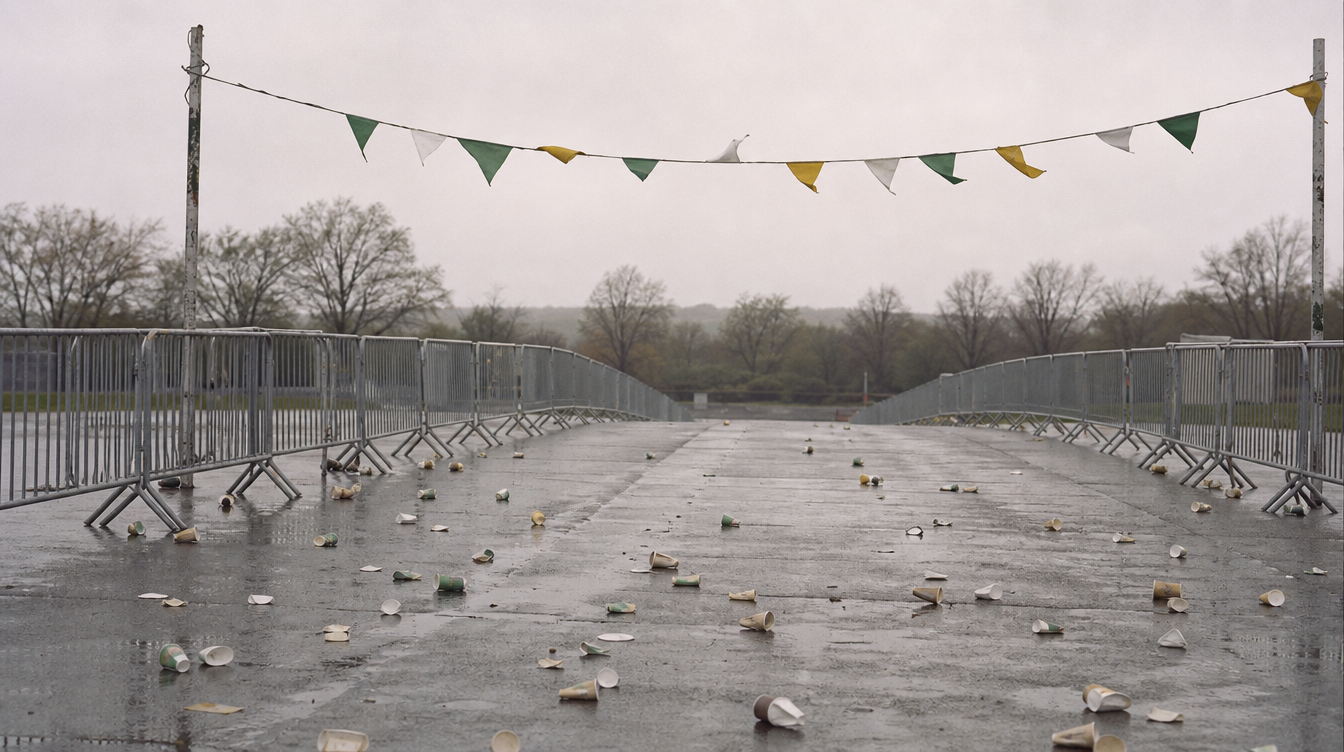
At the finish line, running is easy to explain. There is a clock, a medal and somebody taking a photograph. By dinner, the day has become a number.
The less convenient question arrives afterwards. Will you go out again when there is nothing to collect?
Shoes by the door make a small demand every morning regardless of how the week is going. There is no crowd for getting them on. The route does not improve because the last run went well. It is just there, waiting to be covered again.
A number worth mentioning
A race gives training a deadline. That can be useful. So can a target, a running club or the entirely ordinary pleasure of getting faster. Enjoying a medal does not disqualify anyone from enjoying the run.
On the marathon start line, two ambitions stand in much the same shoes. The bucket-list runner wants to have run a marathon. The regular racer wants to run this one properly: the pace, the split, the number that has been occupying the breakfast table for months. One is collecting an experience. The other has unfinished business with a stopwatch.
These are types, not entry requirements. People move between them. But the distinction becomes clear when somebody asks whether there will be another one.
Still, the number travels well. It fits into a conversation, a caption or an answer to the question of how things are going. The months behind it are less portable. Most consisted of leaving the house when staying in would have been easier.
When the race is over, the deadline has gone. That is when you find out which part you wanted.
Further from the crowd
An ultramarathon takes the question beyond the usual finish line. It is a race longer than the marathon's 42.195 kilometres. Fifty kilometres is a common first step; other events run to a hundred kilometres, a hundred miles or a fixed number of hours. Ultra is a distance category, not another word for a mountain race. Some happen on roads or tracks. Here, think of the long trail events, where the finish can be a very long way from the crowd.
The city-marathon brochure has beautiful people in beautiful kit. There are shoes that look fast while standing still, coordinated colours and a watch expensive enough to deserve its own training plan. There is running in there too.
Further along an ultra trail, the wardrobe has different questions to answer. Does it rub? Does it keep the rain out? Can you reach the food without removing everything? Nobody at the aid station is checking whether the jacket goes with the shoes. They would quite like you to eat something.
The clothing is chosen against chafing and cold rather than for photographs. Pausing is allowed. Sitting down is allowed. Weather is a condition of the course, like the surface, and not negotiable. The clock still works. Whether it is saying anything useful is another question.
An ultra can compress a life into a day: the early optimism, the long middle where nothing is decided, the low point that feels permanent while you are in it. Eventually a bend in the path puts the last stretch out of sight.
It does not automatically make anyone wise. It does provide rather more time alone with an opinion.
The hours have to come from somewhere
The race gets the photograph. Training takes the weekends. Early starts, evenings that end before the conversation does, a Sunday afternoon in which the body is present but not particularly available. Somebody may be doing the shopping while you are improving your ability to be somewhere else for longer.
The sacrifice is not always yours alone. A calendar full of healthy activity can still be a difficult calendar to live beside. Long distances are more enjoyable when the people at home have agreed to the arithmetic.
That does not make the time wasted. A long run can be the best part of a week. It does make the phrase "I just need to get a run in" rather flexible. Occasionally it means returning after lunch.
Practice for the difficult bit
An ultra puts more than the legs to work. The pace slips. The weather changes. The plan that looked sensible at breakfast becomes an irritating document written by someone who was warm.
You have to decide what needs fixing now. Food, a layer, a slower pace, a rest. The whole distance is still there, but it is not the next task. The next task may be getting to the bend, or eating something you were very enthusiastic about when you packed it.
There is useful practice in that: adjusting when the plan stops working, accepting help, taking the next manageable step without requiring the whole day to look promising first. A bad hour does not have to become a verdict on everything that follows.
That is the case for the mental work, rather than the mileage alone. It is not a guarantee that a hundred kilometres will make the rest of life easy. The difficult bits of life rarely come with aid stations. But learning to deal with a hard stretch while you are still inside it is a rather useful thing to rehearse.
Surely this is another status game?
Of course it can be. The distance becomes a personality. The suffering gets photographed. Someone who once mentioned a marathon now has a much larger number to mention.
There is nothing especially private about a private struggle uploaded before breakfast.
But the photograph is taken later. During the long, unremarkable stretches, the story cannot do the work. It cannot warm a hand or tell you whether the next turn is the right one. For a while, the audience has no useful role.
That is the part worth keeping. Not the idea that pain confers character, or that stopping is a moral failure. Sometimes stopping is the sensible decision. The route does not become safer because the caption would have been good.
The appeal is simpler: for a few hours, something needs doing and an account of yourself will not do it.
The next morning
There is a quieter version available without entering a race. The same familiar route, the same awkward hill, the same decision about whether to leave the house. Nobody waiting at the end except whoever was already there.
The race can be over without the running being finished. Tomorrow there is still a route, a pair of shoes and a decision to make. A surprisingly durable arrangement for something that started with an entry form.
You may no longer need a standing ovation. Someone saving you a little hot water would still be nice.